
The Ultimate Guide to Diamond Blades for Angle Grinders
Table of Contents Introduction What Are Diamond Blades? Types of Diamond Blades How to Choose the Right Diamond Blade Best Practices for Using Diamond Blades Frequently Asked Questions Conclusion Introduction Diamond blades are cutting tools that are designed to cut through materials such as concrete, stone, and metal. They are called diamond blades because they are embedded with diamond particl
Release Time:
2023-06-25 22:00
Table of Contents
- Introduction
- What Are Diamond Blades?
- Types of Diamond Blades
- How to Choose the Right Diamond Blade
- Best Practices for Using Diamond Blades
- Frequently Asked Questions
- Conclusion
Introduction
Diamond blades are cutting tools that are designed to cut through materials such as concrete, stone, and metal. They are called diamond blades because they are embedded with diamond particles, which are the hardest substance on earth. Diamond blades are commonly used with angle grinders, which are handheld power tools that are commonly used in construction, metalworking, and other industries.
When it comes to choosing the right diamond blade for your angle grinder, there are several factors to consider. These include the type of material you will be cutting, the size and thickness of the blade, and the type of angle grinder you will be using. In this guide, we will cover all of these factors and more to help you choose the best diamond blade for your specific project.
What Are Diamond Blades?
Diamond blades are circular saw blades that are designed to cut through hard materials. They are made up of a steel core and diamond particles that are embedded in a metal matrix. The diamond particles are what make diamond blades so effective at cutting through hard materials.
One of the advantages of diamond blades is that they can cut through materials that other types of blades can't, such as reinforced concrete and stone. They are also fast and efficient, which makes them a popular choice for professionals in the construction and metalworking industries.
Types of Diamond Blades
There are several different types of diamond blades, each designed for specific materials and applications. Here are some of the most common types of diamond blades:
1. Segmented Blades
Segmented blades have a series of individual segments that are separated by slots. These blades are designed for cutting through hard materials such as concrete and stone. The slots in the blade help to dissipate heat and prevent the blade from overheating.
2. Continuous Rim Blades
Continuous rim blades have a smooth edge with no segments. These blades are designed for cutting through materials such as tile and ceramics. The smooth edge helps to prevent chipping and cracking of the material being cut.
3. Turbo Blades
Turbo blades have a serrated edge that is designed to cut through materials quickly. These blades are commonly used for cutting through hard materials such as concrete and asphalt.
4. Tile Blades
Tile blades are designed specifically for cutting through tile and other ceramic materials. They have a continuous rim with a smooth edge to prevent chipping and cracking.
How to Choose the Right Diamond Blade
Choosing the right diamond blade for your angle grinder is important to ensure that you get the best results for your project. Here are some factors to consider when choosing a diamond blade:
1. Material Type
The type of material you will be cutting is the most important factor to consider when choosing a diamond blade. Different materials require different types of blades. For example, a segmented blade is best for cutting through concrete, while a continuous rim blade is best for cutting through tile.
2. Blade Diameter
The diameter of the blade will depend on the size of your angle grinder and the depth of the cut you need to make. Choose a blade that is compatible with your angle grinder and can make the depth of cut you need.
3. Blade Thickness
The thickness of the blade will affect the speed and quality of the cut. Thicker blades are more durable and can handle heavier loads, while thinner blades are more precise and can make smoother cuts.
4. Wet vs. Dry Cutting
Some diamond blades are designed for wet cutting, which means they require water to cool the blade and prevent overheating. Wet cutting is best for materials such as concrete and stone. Dry cutting is best for materials such as tile and ceramics.
Best Practices for Using Diamond Blades
To get the best results from your diamond blade, here are some best practices to follow:
1. Wear Protective Gear
Always wear protective gear such as safety glasses, gloves, and a dust mask to protect yourself from flying debris and dust.
2. Check the Blade Before Use
Inspect the blade for cracks or damage before use. A damaged blade can be dangerous and should be replaced immediately.
3. Use the Right Speed
Use the recommended speed for your angle grinder and the type of blade you are using. Using the wrong speed can damage the blade and result in a poor-quality cut.
4. Apply Even Pressure
Apply even pressure to the blade when cutting. Uneven pressure can cause the blade to bind and result in a poor-quality cut.
5. Cool the Blade
If you are using a wet blade, make sure there is enough water to keep the blade cool. If you are using a dry blade, take breaks to allow the blade to cool down.
Frequently Asked Questions
1. How long do diamond blades last?
The lifespan of a diamond blade will depend on the material being cut and how well the blade is maintained. With proper use and maintenance, a diamond blade can last for several projects.
2. Can diamond blades be sharpened?
No, diamond blades cannot be sharpened. Once the diamond particles have worn down, the blade will need to be replaced.
3. Can diamond blades be used for dry cutting?
Yes, some diamond blades are designed for dry cutting. However, wet cutting is recommended for materials such as concrete and stone.
4. Can diamond blades be used with other power tools?
Diamond blades are designed specifically for use with angle grinders and should not be used with other power tools.
Conclusion
Choosing the right diamond blade for your angle grinder is an important step in ensuring that you get the best results for your project. Consider factors such as the material you will be cutting, the size and thickness of the blade, and whether you will be wet or dry cutting. Follow best practices such as wearing protective gear, using the right speed, and applying even pressure to the blade. With the right diamond blade and proper technique, you can achieve precise and efficient cuts every time.
Latest News

RICHOICE Catalogue
If you do not have a comprehensive understanding of our products, we have uploaded relevant technical documents for you to download and reference so that you can better understand our product usage and technical parameters
View More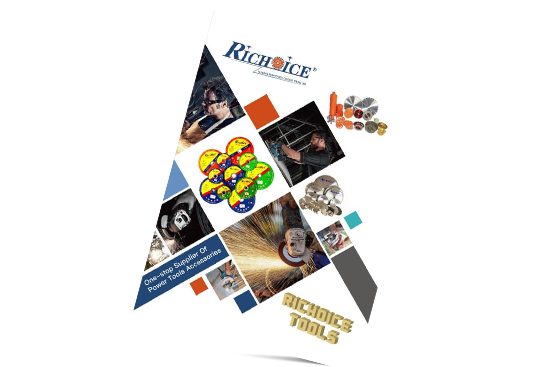


Add official WeChat
Chat with me now
Contact Us
+86 511 85891166 , +86 137 0528 3249
NO.66 Runxing Road, Runzhou Private Economy Development Zone, Zhenjiang, China
 Esperanto
 Shqiptare
 Euskara
 Zulu
Zulu
 Latinus
 Cymraeg
 தமிழ்
தமிழ்
 Slovak
 Slovak
 Afrikaans
